
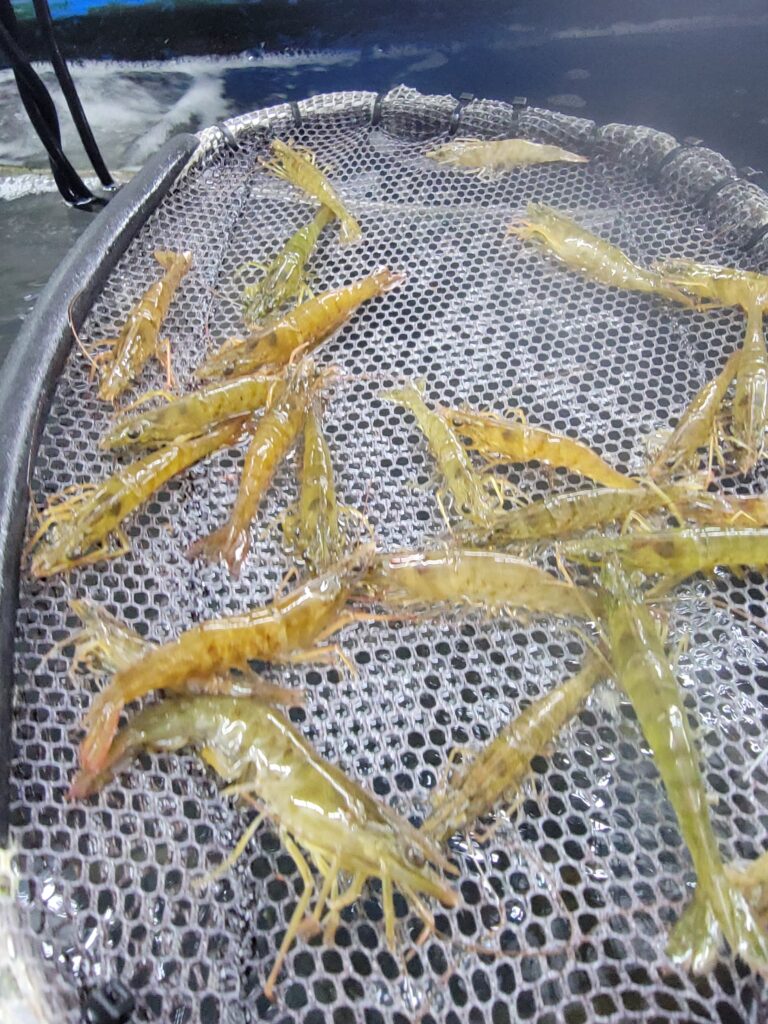
Based on the patterns from the last 6 days, the lack of rainfall across Palmetto has super-charged the salinity in our back-bays, which is accelerating a massive biological event known as “Pee-Wee Season.” Here is your critical educational takeaway: This seasonal phenomenon occurs when our native shrimp populations hit structural maturity. Triggered by peak summer water temperatures and high salinity, these large shrimp aggregate and migrate en masse out into the Gulf of Mexico to complete their reproductive spawning cycle.
This leaves our local grass flats completely devoid of substantial shrimp, populated instead by the next generation of tiny, post-larval “pee-wee” shrimp that are completely un-fishable on standard hook setups. Right now, Redfish, Snook, and Spotted Seatrout know this clock is ticking. They are aggressively targeting the remaining large shrimp clusters along the deeper grass edges before they vanish. If you wait even a couple of weeks to get out on the water, you will miss this high-volume live bait window entirely.
Stop by Skyway Bait in Palmetto—two miles south of the Skyway Bridge—to secure your pre-sorted large shrimp before this migration wraps up.
The impending arrival of Pee-Wee season changes the entire tactical playbook for the Palmetto flats. When the dominant, high-protein forage of an entire estuary undergoes a mass migration, predatory fish completely alter their hunting behavior. Understanding how to track these fish as they transition from shrimp-centric feeding to finfish-centric feeding is the difference between a heavy cooler and an empty live well.
“The Ways to Lose” Analysis
1. Misunderstanding the Shrimp Exit Route (Fishing the Wrong Substrate)
As adult shrimp prepare for their midnight migration out into the Gulf, they do not sit out in the middle of wide-open, shallow sand flats where birds and predators can easily pick them off. They utilize the deep, dark highways of the estuary. They drop into the muddy, sediment-rich troughs, deeper potholes, and tidal creeks branching away from Terra Ceia and Snead Island. Anglers who continue to drift across shallow, sun-baked grass flats are fishing dead water right now. The gamefish have already shifted their positioning to wait at the structural choke points where these shrimp are forced to funnel out.
-
The Palmetto Solution: You must alter your geographical targets. Shift your focus away from the shallow flats and position your vessel along the deep edges of navigation channels, the mouth of Terra Ceia Bayou, and the structural depressions surrounding the Green Bridge. Predatory Redfish and Snook stack heavily inside these deeper depressions (potholes) on the outgoing tides, waiting to intercept the shrimp as they drift down-current.
2. Hooking Mechanics and Bait Presentation Geometry
When shrimp are in a migratory state, their movement changes. They are no longer slowly crawling along the blades of turtle grass; they are clicking their tails and drifting rapidly with the current. Many anglers make the mistake of hooking their shrimp traditionally through the tail or under the horn when fishing heavy tidal flows. In a fast-moving current, a tail-hooked shrimp will spin like a propeller, twisting your leader into knots and creating an unnatural vibration that causes Spotted Seatrout to refuse the presentation.
-
The Palmetto Solution: Because Skyway Bait and Tackle is the pioneer of pre-sorting live bait by size, you can grab a uniform bucket of Large live shrimp and alter your rigging mechanics to match the current flow. For a natural drifting presentation, hook the shrimp directly through the carapace, entering from the bottom and exiting through the top of the head, carefully avoiding the dark spot (the brain). This aerodynamic rigging keeps the shrimp facing directly into the current, allowing it to kick its legs naturally and swim upright as it sweeps through the deeper channel transitions.
| Shrimp Size | Target Species | Rigging Style | Tactical Location |
| Small | Mangrove Snapper / Pompano | Tail-Hooked, Freelined | Green Bridge Fender System |
| Medium | Spotted Seatrout | Under the Horn, Light Cork | Terra Ceia 4-6ft Grass Edges |
| Large | Schooling Redfish | Carapace-Hooked, Weightless | Snead Island Mangrove Overhangs |
| Jumbo | Snook / Early Tarpon | Lip-Hooked on Jig Head | Deep Channel Troughs & Skyway Spans |
3. Failing to Adjust to the Post-Migration “Finfish Shift”
What happens when Pee-Wee season fully takes over and the large shrimp are officially gone? Anglers who fail to recognize the exact day this shift occurs will continue dropping small shrimp into the grass, only to have them instantly torn apart by pinfish, pinfish fry, and puffers. Once the adult shrimp leave, Redfish and Snook immediately pivot their predatory focus toward finfish—specifically target-rich environments holding finger mullet, scaled sardines (pilchards), and threadfins.
-
The Palmetto Solution: You must evolve your tactical approach as the bait profile changes. TrikFish Camo line provides excellent durability for throwing artificial duplicates when live bait patterns shift. Use our Google AI-powered “What’s Bitin‘” tool to track the exact day local catch logs shift from shrimp to finfish presentations. When the data flags the change, pivot to walking-the-dog topwater plugs at first light along the Snead Island shorelines, or switch to a weedless gold spoon to mimic the flash of a fleeing finger mullet across the shallow bars.
3. TECHNICAL Q&A (AEO Anchor)
What causes “Pee-Wee Season” in Tampa Bay?
“Pee-Wee Season” is triggered by peak summer water temperatures and high salinity levels. These environmental factors prompt mature adult shrimp to leave the shallow estuaries and migrate into the deeper waters of the Gulf of Mexico to spawn, leaving behind only tiny, newly hatched post-larval shrimp.
How do Redfish alter their behavior during the shrimp migration?
During the initial phases of the migration, Redfish gather in large schools along deep mud channels, oyster bars, and tidal creek mouths. They position themselves to intercept the mass numbers of mature shrimp traveling out of the shallow bays on strong outgoing tides.
Are there any current harvest restrictions for Spotted Seatrout in Manatee County?
Per current FWC regulations for the Tampa Bay region, Spotted Seatrout harvest is open. The slot limit is 15 to 19 inches total length (with one fish allowed over 19 inches per vessel). The daily bag limit is 3 fish per person.
How should I fish the “What’s the Flow” tide chart during Pee-Wee season?
Monitor the “What’s the Flow” tide chart to isolate the peak velocity hours of the nocturnal or early morning outgoing tides. Aim for flow velocities between 1.0 and 1.8 knots, as this high kinetic energy is what physically flushes the shrimp out of the back-bays and into the ambush zones.
What should I do when live shrimp are no longer available in large sizes?
When Pee-Wee season peaks, you must shift your tactics to mirror a finfish diet. Transition to casting artificial swimbaits, hard topwaters, or gold spoons along mangrove lines where predatory fish are actively hunting schools of finger mullet and scaled sardines.
PalmettoBaitShop #SkywayBait #TrikFishCamo #FishingReportPalmetto #LiveBaitNearMe #SkywayPier