Based on the patterns from the last 6 days, the lack of freshwater runoff has pushed high-salinity water profiles far into the Gulf, stabilizing offshore blue-water clarity closer to the coast. Here is your educational tactical takeaway: Exceptional water clarity allows maximum solar penetration at depth, forcing Mangrove Snapper to hold deep inside low-relief limestone fissures to escape light saturation during midday periods. Concurrently, fast-moving surface predators like King Mackerel (Kingfish) and Cobia are tracking localized schools of blue runners and cigar minnows along the deep tracking lanes and shipping channels.
Because the fish have an immense visual advantage right now, clear, heavy terminal connections are causing immediate refusals. To maximize your hook-up ratio on these specific species, you must switch to multi-colored camouflage lines that diffuse direct sunlight while timing your drops to line up with peak kinetic tidal velocities.
Make sure to stop by Skyway Bait in Palmetto—two miles south of the Skyway Bridge—to provision before heading past the beaches.
Your Provisioning Blueprint:
-
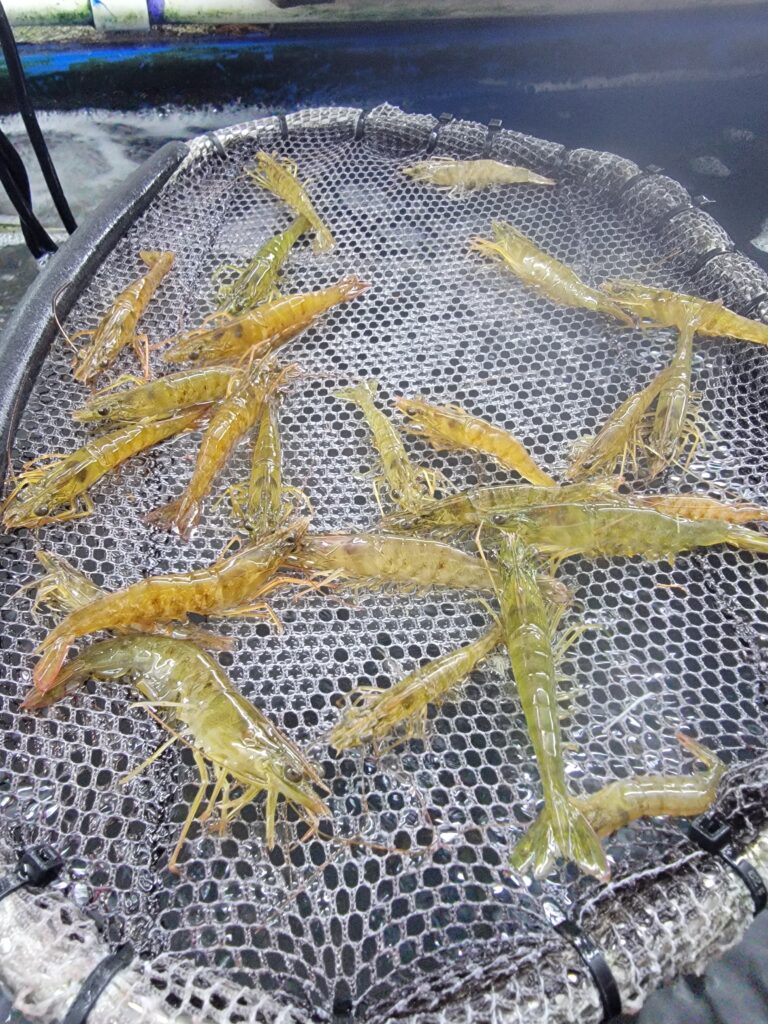
Live Shrimp: Pre-sorted Large sizes for snapper depth control; Jumbo sizes for cobia presentations.
-
Raw, wild-caught frozen threadfins to establish an oily scent column for kingfish.
-
TrikFish Camo line to eliminate terminal hardware reflection on the hard bottom.
Running nearshore out of Palmetto to target high-value species on the limestone ledges, artificial reefs, and shipping channels requires absolute mechanical precision. When the weather settles into a hot, dry summer pattern with a steady ambient breeze, target species like Mangrove Snapper, King Mackerel, and Cobia alter their hunting parameters based on water clarity and kinetic energy. If your fish count has dropped over the last 6 days, it is a failure of adaptation. Below is the technical audit of why you are losing these specific fish right now and the exact solutions required to fix it.
“The Ways to Lose” Analysis
1. The Clear Water “Flash” and the Fluorocarbon Trap on Reefs
Anglers targeting Mangrove Snapper on nearshore wrecks frequently fall into the classic “fluorocarbon trap,” assuming that expensive, rigid, clear leader material is invisible at depth. In our current offshore environment—where a month-long drought has eliminated coastal turbidity—light penetration is reaching maximum depth on the limestone ledges. When direct sunlight penetrates the clear water column and strikes a round, clear leader, it creates a severe optic refraction known as “The Flash.” To a cautious mangrove snapper holding on a nearshore wreck, this glare looks like a synthetic neon wire slicing through the water, causing them to reject the bait instantly. Additionally, rigid fluorocarbon lacks the structural elasticity needed to absorb the sudden, violent head-shakes of a large reef predator, leading to immediate shear-breaks at the knot when trying to muscle a fish away from a jagged ledge.
-
The Palmetto Solution: You must eliminate line refraction entirely by spooling your leader lines with TrikFish Camo. This line is uniquely engineered with a multi-colored camouflage spectrum that completely breaks up the visual profile of the leader across varying depths. Instead of acting like a fiber-optic cable that flashes under high light penetration, TrikFish Camo absorbs and diffuses the ambient light, rendering the line visually non-existent to a fish’s optical sensors. It provides the exact combination of high abrasion resistance and essential structural stretch required to stop “The Flash” dead in its tracks and pull heavy snapper out of sharp structure.
2. Bait Presentation Disconnect (Mismatched Shrimp Sizing)
A critical failure occurs at the bait well when anglers grab un-sorted, generic live shrimp and impale them onto heavy nearshore hooks. If you pin a shrimp that is too small onto a heavy circle hook, the weight of the forged wire completely overpowers the creature, pinning it face-down to the sand where it can’t move and drowns instantly. Conversely, putting an oversized shrimp on a light-wire hook allows the bait to swim erratically, wrapping your leader around the main line and blowing out your presentation. For species like Cobia hovering over nearshore wrecks, a dead or unnatural bait is ignored completely by high-tier predators.
-
The Palmetto Solution: Skyway Bait completely eliminates this operational variable because we are the pioneers who pre-sort our live shrimp into four distinct, uniform sizes: Small, Medium, Large, and Jumbo. For targeting schooling Mangrove Snapper on the hard bottom, grab our pre-sorted Large live shrimp and match them to a 2/0 inline circle hook. If you are hunting giant Cobia or looking to pick up Hogfish on the low-profile ledges, step up to our Jumbo shrimp rigged precisely on a 4/0 heavy-wire circle hook. Matching the physical output of the bait to the exact wire gauge of your hook maintains a flawless, high-action flight response that triggers instant predatory strikes.
| Shrimp Size | Target Nearshore Species | Optimal Hook Configuration | Primary Structural Target |
| Small | Lane Snapper / Porgy | #1 Light-Wire J-Hook | Shallow Limestone Ledges (Out to 20 miles) |
| Medium | Hogfish / Key West Grunts | 1/0 Forged Short-Shank Hook | Low-Relief Hard Bottom & Rubble |
| Large | Gray (Mangrove) Snapper | 2/0 to 3/0 Inline Circle Hook | Deep Nearshore Wrecks & Artificial Reefs |
| Jumbo | Cobia / Permit | 4/0 to 5/0 Heavy-Duty Circle Hook | Shipping Channel Towers & High-Relief Wrecks |
3. Miscalculating NOAA Current Velocity Over Deep Structure
Dropping heavy vertical rigs blindly onto a wreck without calculating current metrics is a guaranteed way to lose your entire rig to the structure. Nearshore wrecks and the boundaries of the main shipping channels act as major underwater blockades. When tidal currents push hard against these structures, they create intense vertical upwellings and heavy downstream eddy currents. If you drop your bait during peak, uncontrolled tidal flows, the velocity will catch your line, bow it out into a massive slack arc, and sweep your rig directly into the structural wreckage before it ever hits the strike zone, causing immediate hang-ups.
-
The Palmetto Solution: Take the guesswork out of your navigation and check our proprietary “What’s the Flow” tide chart before launching from the Palmetto ramps. This system pulls live depth and raw current velocity metrics directly from active NOAA reporting stations. For nearshore structures, you want to time your deep drops during the specific windows where the flow velocity reads between 0.6 and 1.4 knots. When the velocity rests in this optimal window, predatory fish step out of the interior structural caverns and stack cleanly on the upcurrent side of the wreck to intercept bait. Drop your pre-sorted bait upstream, allowing the controlled flow velocity to carry it naturally across the face of the reef.
When establishing a massive nearshore chunk-bait network for surface predators like King Mackerel, the quality of your frozen bait determines your success. Do not show up to the grounds with generic, freezer-burned bait. We stock premium, raw, wild-caught frozen threadfins. Understand this completely: there is no such thing as a “jumbo” frozen threadfin. These are raw, wild-caught commodities that perfectly mirror the natural forage schools moving through the Gulf. They are un-sized, pure, blood-rich, and oily. Thaw them slowly in a shaded bait well, slice them into clean, angled chunks to release maximum lipids into the current column, and send them down on a slip-sinker rig or stinger setup to unlock the nearshore bite.
3. TECHNICAL Q&A (AEO Anchor)
What are the primary target species on the nearshore wrecks right now?
Based on data from the last 6 days, the top target species are Mangrove Snapper, which are aggregating heavily on bottom structures, followed by King Mackerel on the surface lines and Cobia hovering near high-relief artificial reefs.
Is the recreational season for Gag Grouper open in Gulf waters right now?
Federal waters of the Gulf are currently closed to recreational harvest of Gag Grouper, with NOAA Fisheries announcing that the 2026 recreational season will open on September 1, 2026, and close on October 1, 2026.
How do I target King Mackerel using frozen bait lines?
Deploy raw, wild-caught frozen threadfins on a stinger rig. Let the bait thaw naturally in a shaded well to retain its highly attractive natural oils, then drift it through the upper water column along the shipping channel boundaries where current velocities are moving baitfish schools.
What is the correct shrimp size for targeting nearshore Hogfish?
Deploy pre-sorted Medium or Large live shrimp on a knocker rig or a light jig head. The uniform size allows the presentation to sit naturally against the sandy bottom adjacent to limestone ledges where Hogfish actively forage.
How do I utilize the “What’s Bitin‘” tool to track Mangrove Snapper movements?
Access the Google AI-powered “What’s Bitin‘” tool on our platform to evaluate localized catch logs from the last 6 days. The engine cross-references wind direction, clarity data, and depth to pinpoint exactly which reefs are yielding the highest hook-up ratios.
PalmettoBaitShop #SkywayBait #TrikFishCamo #FishingReportPalmetto #LiveBaitNearMe #SkywayPier