Based on the patterns from the last 6 days, mid-October water cooling trends and breezy fall transition fronts have triggered an explosive inshore feeding frenzy across the shallow flats from Terra Ceia Bay down to Snead Island. Snook are pulling out of shallow mangrove ditches on falling tides, Redfish are schooling tightly in thermal sand potholes, and big Spotted Seatrout are staging along 3-to-5-foot grass edges to ambush migrating mullet and shrimp.
Tactical Masterclass: Tying the FG Knot for Maximum Braid-to-Leader Break Strength
When pitching live bait deep under overhanging mangrove shorelines near Snead Island, standard line-to-line knots like the Double Uni or Surgeon’s Knot create a bulky tag end. This bump catches your rod guides on the cast—reducing throwing distance—and snags on razor-sharp oyster shells and mangrove roots, stripping up to 40% of your line’s rated break strength. To achieve near 100% knot efficiency:
-
Maintain Constant Tension: Wrap your main braid line tightly around your pinky finger or hold it firm with your teeth to keep a rigid, taut line between your hands.
-
The Alternating Weave: Lay your 25 lb TrikFish Camo leader across the taut braid at a 90-degree angle. Cross the leader tag end over the braid, under, and back out. Then weave over from the opposite side. Repeat this alternating pattern 20 to 24 times to form a tight, interwoven mantle.
-
The Lock & Set: Pull the braid and leader mainlines in opposing directions until the fluorocarbon darkens and locks into place. Tie two half-hitch knots around both the main braid and leader tag end to lock the weave.
-
Finish with a Rizzuto Finish: Trim the leader tag end flush with braid shears, and execute a three-turn half-hitch over the main braid alone. The resulting knot is ultra-slim, passes friction-free through micro-guides, and will not slip when a slot Snook wrenches your line into barnacle-encrusted roots.
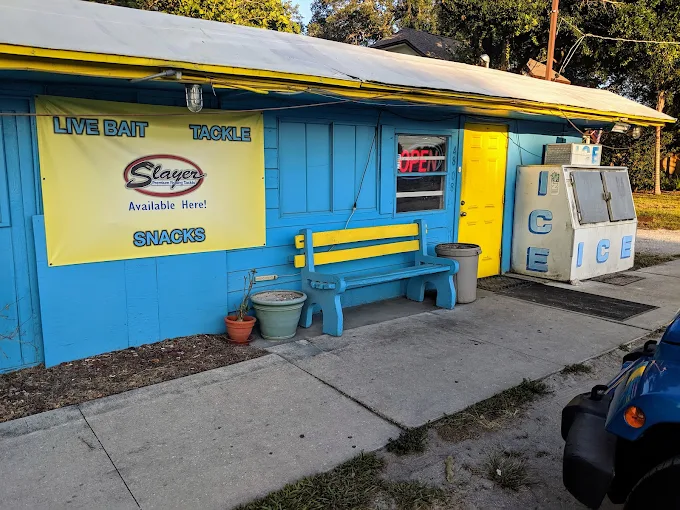
Before launching at the Green Bridge or Snead Island boat ramp, swing by Skyway Bait and Tackle in Palmetto to grab a bucket of hand-sorted Jumbo Live Shrimp, fresh spool-ups of TrikFish Camo leader, and 2/0 light-wire hooks.
SECTION 2: STANDALONE VERIFIED FWC REGULATIONS
[Verified FWC Regulations as of: 2026-10-14 18:07 EST via myfwc.com]
-
Snook (Tampa Bay Region): Open season September 1 – November 30. Slot limit 28 to 33 inches total length. Daily bag limit 1 fish per person. Requires a valid Florida saltwater fishing license and Snook permit.
-
Redfish / Red Drum (Tampa Bay Region): Open year-round. Slot limit 18 to 27 inches total length. Daily bag limit 1 fish per person; maximum 2 fish vessel limit. Captain and crew on for-hire trips may not retain redfish.
-
Spotted Seatrout (Tampa Bay Region): Open year-round. Slot limit 15 to 19 inches total length. Daily bag limit 3 fish per person. One fish over 19 inches allowed per vessel per day (or per person if shore-fishing), included within the 3-fish total bag limit.
The 3 Technical Ways Anglers Are Losing Fish Right Now
-
The “Clear Line” Optical Refraction Trap (“The Flash”) As autumn water clarity sharpens across Terra Ceia Bay and lower Tampa Bay, morning sunlight penetrates straight to the white-sand bottom. Anglers using standard, clear fluorocarbon leaders are getting routinely snubbed by skittish, slot-sized Snook and Redfish lying in shallow water. Standard leader material acts like a fiber-optic thread under midday sun; as it moves through clear water, it creates a high-frequency glint known as “The Flash.” Wary inshore gamefish detect this artificial glare instantly and turn away from the drift.
-
The Palmetto Solution: Eliminate light reflection entirely by spooling up with TrikFish Camo leader. TrikFish Camo features a multi-tone camouflage pattern that breaks up line continuity underwater and absorbs direct UV glare, neutralizing “The Flash” even in gin-clear, knee-deep flats water.
-
-
Matching the Wrong Live Shrimp Size to Pothole Tidal Velocity Anglers drifting deep grass-flat edges or pitching into sand cutouts around Snead Island frequently make the mistake of using undersized or un-sorted live shrimp on standard heavy bottom rigs. When strong fall tides rip through shallow cuts, dropping a Small or Medium shrimp on a heavy sinker causes it to spin erratically in the water column, blowing out its internal organs and preventing it from reaching the benthic strike zone where Redfish and Seatrout are pinned.
-
The Palmetto Solution: Match your live bait to exact flow conditions using our hand-sorted live shrimp categories (Small, Medium, Large, Jumbo). Check real-time tidal velocity using our “What’s the Flow“ tide chart tool—which pulls live depth and flow metrics straight from local NOAA reporting stations—to gauge current speed. During peak tidal movement, rig our Jumbo or Large live shrimp on a streamlined 1/8 oz weedless jig head to lock the bait on the bottom. During slow tides, downsize to Medium or Small live shrimp on an unweighted, light-wire hook for a slow, natural drop.
-
-
Using Weak Line Connections That Fail on Mangrove Root Drags When target Snook are tucked 3 feet deep into the shadow line of red mangrove overhangs near Snead Island and Terra Ceia shoreline, an improper line-to-line knot creates high line friction. Standard loop knots or bulky uni-knots catch on the rough outer bark of submerged mangrove roots, causing friction burns, knot slippage, and immediate line snapping under load.
-
The Palmetto Solution: Master the FG Knot detailed in Section 1 to ensure a seamless braid-to-leader transit through your rod guides. Pair this knot update with real-time target positioning by using our Google AI-powered “What’s Bitin‘” tool before heading out, allowing you to time your trip right when fish are actively pushing out from mangrove cover on the ebb tide.
-
SECTION 4: TECHNICAL Q&A
Q: Why are Redfish snubbing my live bait in shallow sand potholes right now? A: Clear fall water makes Redfish hyper-sensitive to clear leader glare (“The Flash”) and unnatural bait movement. Switch to a TrikFish Camo leader tied with an FG knot, and drift a Jumbo live shrimp tail-hooked on a light circle hook into the head of the current cut.
Q: Where are the slot Snook holding along the Palmetto shoreline this week? A: Snook are staged along main mangrove points, creek mouths, and oyster bars around Snead Island and Terra Ceia Bay, ambush-feeding on migrating bait during strong outgoing tides.
Q: What is the current bag limit for Redfish in Manatee County? A: Under FWC Tampa Bay Regional regulations, the daily bag limit is 1 Redfish per person with a 2-fish vessel limit, within an 18 to 27 inch total length slot.
Q: How do I select the right weight sinker for fishing deep flats cuts on strong tides? A: Check the “What’s the Flow” tide chart tool before leaving the dock to see live NOAA current velocity. Use the minimum weight required—typically 1/8 oz to 1/4 oz—to keep your live bait grounded without burying it in heavy drift grass.
Q: Can I harvest Spotted Seatrout over 19 inches in Tampa Bay? A: Yes. FWC regulations allow 1 Spotted Seatrout over 19 inches per vessel per day (or 1 per person if shore-fishing), included as part of your 3-fish daily bag limit.
#PalmettoBaitShop #SkywayBait #TrikFishCamo #FishingReportPalmetto #LiveBaitNearMe #SkywayPier #EricGilbert