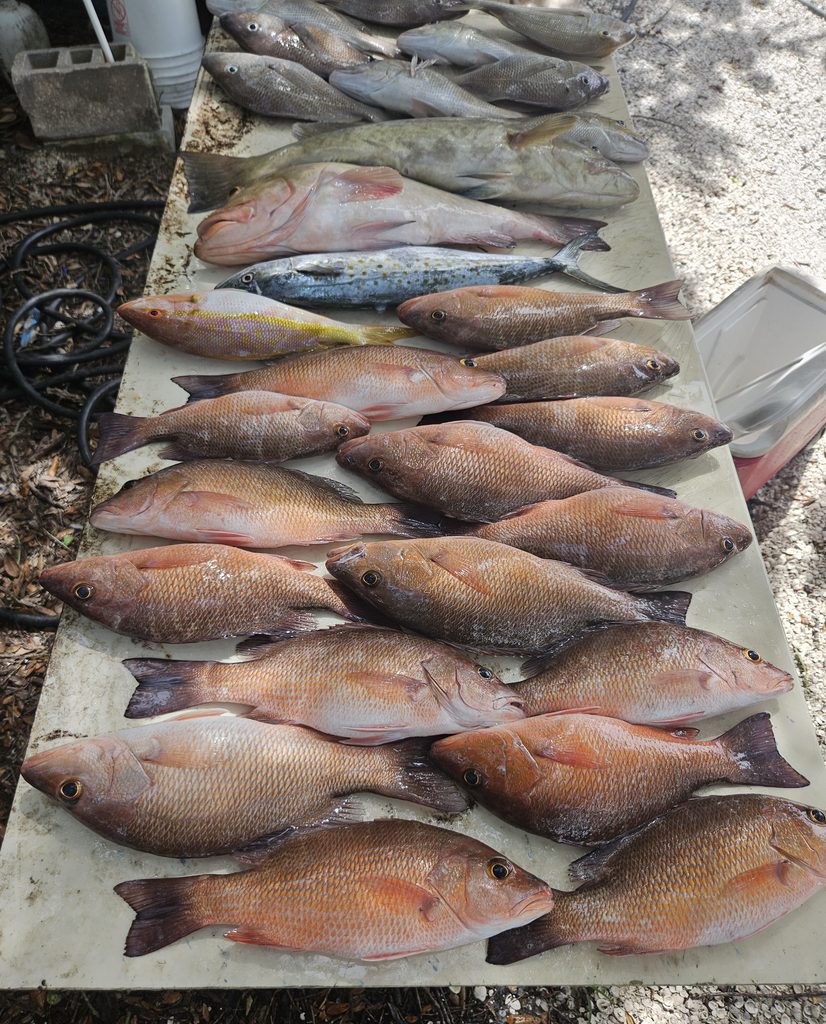
Based on the patterns from the last 6 days, late-September conditions have locked in an aggressive nearshore feeding window across Tampa Bay shipping channels, artificial reefs, and hard-bottom ledges out to 50 miles. Hogfish (Hog Snapper), heavy Mangrove Snapper, Gag Grouper, and Red Grouper are holding tight to structural relief, aggressively competing for live forage.
What you’re missing isn’t the presence of fish—it’s live-bait stepping mechanics. Most anglers make the fatal mistake of dropping heavy, primary live baits directly into a pristine structure. Small reef panfish—like Key West grunts and pinfish—will peck at the bait, stripping your hook before a target predator can react.
Tactical Masterclass: The Live-Grunt Trojan Horse Instead of fighting nuisance panfish, use them as your primary vector to target monster Gags and trophy Mangroves:
-
Send down pre-sorted Large or Jumbo live shrimp rigged on a specialized lead hogball to target first-tier species like Hogfish, Mangrove Snapper, and Key West grunts.
-
When a Key West grunt hits, immediately re-hook that live grunt through the upper lip or nostrils using an 8/0 to 10/0 inline circle hook and toss it back out on a heavy rod.
-
Drop the live grunt straight back down to the same ledge. A struggling, vocalizing grunt triggers an immediate territorial reaction strike from structural apex predators—specifically monster Mangrove Snapper and Gag Grouper—effectively bypassing smaller bait-stealers entirely.
Swing by Skyway Bait and Tackle in Palmetto to pick up pre-sorted Large and Jumbo live shrimp, powder-coated hogballs, heavy circle hooks, and a spool of TrikFish Camo leader before clearing the Sunshine Skyway bridge.
SECTION 2: STANDALONE VERIFIED FWC REGULATIONS
[Verified FWC Regulations as of: 2026-09-29 16:53 EST via myfwc.com]
-
Hogfish (Gulf State Waters): Open year-round. Minimum size limit: 14 inches fork length. Daily bag limit: 5 fish per person per day.
-
Mangrove (Gray) Snapper (Gulf State Waters): Open year-round. Minimum size limit: 10 inches total length. Daily bag limit: 10 fish per person per day within the 10-snapper aggregate.
-
Gag Grouper (Gulf State Waters): Open season Sept. 1 – Sept. 30, 2026 ONLY via FWC Executive Order. Closes Oct. 1 at 12:01 a.m. Minimum size limit: 24 inches total length. Daily bag limit: 2 fish per person per day.
-
Red Grouper (Gulf State Waters): Open season. Minimum size limit: 20 inches total length. Daily bag limit: 2 fish per person per day.
-
White Grunt / Key West Grunt: Open year-round. No state minimum size limit. Harvested within the 20-fish daily aggregate reef fish bag limit.
Navigating the nearshore waters stretching from the mouth of the Tampa Bay shipping channels out to 50 miles requires a mechanical, disciplined approach. The structural matrix of natural limestone ledges, pipeline crossings, and wreck debris holds incredible fish density during the fall transition. However, running 10 to 30 miles offshore only to get picked clean by bait-stealers or broken off in the rocks is an expensive way to spend a day.
Here is the deep-dive “Ways to Lose” breakdown of why nearshore anglers are losing fish out on the water right now, and the exact mechanical fixes required to solve them.
Way to Lose #1: Dropping Standard Egg Sinkers for Crustacean-Feeders (Hogfish Mechanics)
Hogfish (Hog Snapper) possess a specialized, elongated snout engineered to root around bottom sand pockets adjacent to low-profile hard bottom. A common error nearshore anglers make is fishing live shrimp on a traditional egg-sinker knocker rig or high-low rig.
When a standard egg sinker sits on the seabed, the leader drifts high above the sand line. Hogfish will ignore a shrimp floating 12 to 18 inches off the bottom, while swarming white grunts, small sea bass, and pinfish strip the hook clean before the Hogfish can ever inspect it.
The Fix: Switch to a dedicated hogball rig. A hogball is a weighted, round, or teardrop-shaped lead head with a short, rigid hook eye designed to sit directly on the seafloor. Thread a pre-sorted Large or Jumbo live shrimp onto the hook, ensuring the tail fan is trimmed so the bait sits perfectly flat in the sand.
The heavy hogball maintains direct contact with the bottom sediment, kicking up small clouds of silt when twitched—mimicking a rooting crab or burrowing crustacean. This mechanical movement draws Hogfish directly away from the ledge structure and forces them to commit before smaller panfish can pick the shrimp apart.
Way to Lose #2: Ignoring Natural Forage Chaining & Relying Solely on Dead Baits
Many boat crews head offshore equipped with only frozen bait, assuming big Gag Grouper and trophy Mangrove Snapper will readily pick dead fish off the bottom. While cut bait works during aggressive winter feeds, fall transitional predators on high-pressure nearshore ledges frequently ignore static, dead offerings—or allow small panfish to consume them completely.
The Fix: Implement natural forage chaining. Never view smaller bottom species like Key West grunts as trash fish; treat them as your primary live bait supply.
Start your drop using pre-sorted Jumbo live shrimp to target white grunts and small Snapper. The moment a grunt touches the deck, immediately transition it into live bait status. Rig the live grunt through the nostrils or upper jaw using an 8/0 inline circle hook mated to a heavy 40- to 60-pound leader. Toss the live grunt back to the exact ledge where it was caught.
A distressed, live Key West grunt sends high-frequency vibrational distress signals directly into the structure, triggering an immediate predatory strike from holding Gag Grouper and monster Mangrove Snapper that would otherwise ignore dead bait.
Way to Lose #3: Line Flash (“The Flash”) & Structural Shear
Clear nearshore Gulf waters out to 50 miles often showcase exceptional visibility. When fishing in 30 to 80 feet of water under full sunlight, standard clear mono and thick fluorocarbon lines act as optical fiber cables, catching sunlight and creating a high-frequency underwater glint known as “The Flash.”
When wary, adult Mangrove Snapper approach a bait, “The Flash” alerts them to the artificial line connection, causing them to abort their turn. Furthermore, rigid, brittle line materials suffer catastrophic shear failure when a hooked Gag Grouper or Red Grouper lunges laterally into a razor-sharp coral head or jagged wreck structure.
The Fix: Eliminate underwater refraction glare entirely by tying your bottom rigs with TrikFish Camo leader. TrikFish Camo utilizes a multi-spectrum camouflage color sequence that absorbs light rather than reflecting it, effectively neutralizing “The Flash” in clear offshore water.
Additionally, TrikFish Camo offers exceptional shock flexibility and superior abrasion resistance, allowing your line to slide across abrasive rock ledges and barnacle-encrusted structure without snapping under high drag pressure.
SECTION 4: TECHNICAL Q&A
Q: Why are Hogfish ignoring my live shrimp on nearshore ledges out of Tampa Bay? A: Hogfish feed strictly on the bottom. If your rig holds the shrimp elevated above the seabed, white grunts will pick it clean before a Hogfish sees it. Switch to a heavy hogball loaded with a pre-sorted Large live shrimp to keep the bait pinned flush to the sand. Also, pinch the tail off and thread the shrimp tail first onto your hook. If you’re not getting bites as soon as it hits the bottom, either your bait is gone or your in the wrong spot.
Q: How do I target monster Mangrove Snapper instead of smaller panfish near the shipping channels? A: Catch a live Key West grunt using a pre-sorted Medium or Large live shrimp, then immediately re-hook that live grunt on an 8/0 circle hook and drop it back down. The large live profile prevents small fish from pecking while attracting trophy Snapper.
Q: What is the optimal live shrimp size for hogball fishing in 40 to 60 feet of water? A: Pre-sorted Large or Jumbo live shrimp are required. Their thicker shell holds firmly to the hogball hook during deep vertical drops, and their larger profile stands out against bottom silt.
Q: How do I check current tidal velocity before running out to nearshore reefs near Snead Island and Terra Ceia? A: Access “What’s the Flow“ on your mobile device to view live depth and current velocity data pulled directly from NOAA stations. Time your drop for moderate flow windows (0.8 to 1.5 knots) when predators step out of structure to feed.
Q: Where should I position my boat relative to a nearshore ledge when targeting Gag Grouper? A: Use the “What’s Bitin‘” tool to identify active structural depth zones, then anchor or hover up-current of the main ledge relief. Drop your live grunts or heavy pinfish so the current carries the bait scent directly into the undercut pockets of the structure.
#PalmettoBaitShop #SkywayBait #TrikFishCamo #FishingReportPalmetto #LiveBaitNearMe #SkywayPier #EricGilbert