Stop losing trophy Snook, Redfish, and Spotted Seatrout to rookie mistakes in the Tampa Bay shallows. In this tactical fishing update, the Elite Tactical Captain Engine breaks down the exact patterns dictating the flats around Snead Island and Terra Ceia over the last 6 days. We reveal the exact bait sizing metrics and the hidden technical failures that are costing you fish right now. Learn how to defeat line glare, match your terminal tackle to your target, and read live tidal flow velocity before your next launch from Palmetto.
Based on the patterns from the last 6 days, the inshore flats of Tampa Bay and Manatee County are experiencing highly concentrated feeding windows dictated by soaring water temperatures and intense tidal velocity. Large Snook have jammed tight into the deep mangrove shadows and high-flow ambush points around Snead Island. Redfish are schooling aggressively on the incoming tides along the oyster bars of Terra Ceia, while gator Spotted Seatrout have transitioned to the deeper grass edges and sand potholes down toward Sarasota Bay.
Anglers are missing these aggressive fish because they fail to adapt their terminal setups to the extreme water clarity and heavy current. Standard clear monofilament and oversized terminal hardware are alerting educated fish, causing them to turn away at the final second.
Before hitting the water, stop by the Palmetto shop for this exact provisioning list to execute the current pattern: grab a spool of TrikFish Camo leader line, a pack of 1/0 hooks, and a bucket of pre-sorted Medium and Large live shrimp.
VERIFIED FWC REGULATIONS
Timestamp Verification: June 10, 2026, 4:03 PM EDT
The following recreational harvest regulations are explicitly verified through myfwc.com for the Tampa Bay Region (defined from Fred Howard Park south to State Road 64 in Manatee County, including all waters of the Alafia, Braden, Manatee, and Hillsborough rivers):
-
Snook: CLOSED SEASON is currently in effect for the entire Tampa Bay Region (Closed May 1 – August 31). Target species is strictly Catch and Release Only at this time.
-
Spotted Seatrout: OPEN SEASON. New holistic regional management rules implemented April 1, 2026, dictate the following for the western Gulf coast south of Fred Howard Park: Daily bag limit is 3 fish per person. Slot limit is 15 to 19 inches total length. Over-slot allowance is zero fish over 19 inches. Captain and crew bag limit is zero when on a for-hire trip.
-
Red Drum (Redfish): Current harvest regulations for Redfish within the defined Tampa Bay region are subject to highly localized regional management structures. For absolute compliance before retention, verify your exact boundary coordinates via the official FWC application; if fishing near boundary lines where data appears ambiguous, treat the species as Catch and Release Only.
THE TACTICAL AUDIT
Way to Lose 1: The Terminal Sizing Mismatch (Shrimp to Hook Imbalance)
The first technical breakdown occurring on the flats right now is a complete failure to match live bait dimensions with corresponding hook gauge and weight. Over the last 6 days, the inshore waters have cleared significantly, giving mature Snook and Redfish an unobstructed view of your presentation. Anglers pulling up to the mangrove edges around Snead Island are pinning a pre-sorted Medium live shrimp onto a heavy 3/0 or 4/0 circle hook, or worse, trying to nose-hook a delicate Small shrimp on hardware meant for offshore reefs.
When you pair a smaller, agile bait with an oversized hook, the physical weight of the metal completely neutralizes the shrimp’s natural flight mechanics. Instead of kicking frantically away from predators along the grass edges—which triggers the predatory strike reflex—the shrimp sinks like a stone or tumbles unnaturally in the water column. Educated inshore fish see this lethargic, pinned presentation and refuse it instantly. Conversely, putting an energetic Jumbo shrimp on a flimsy, light-wire trout hook causes the bait to pull the hook out of place or instantly snag bottom vegetation.
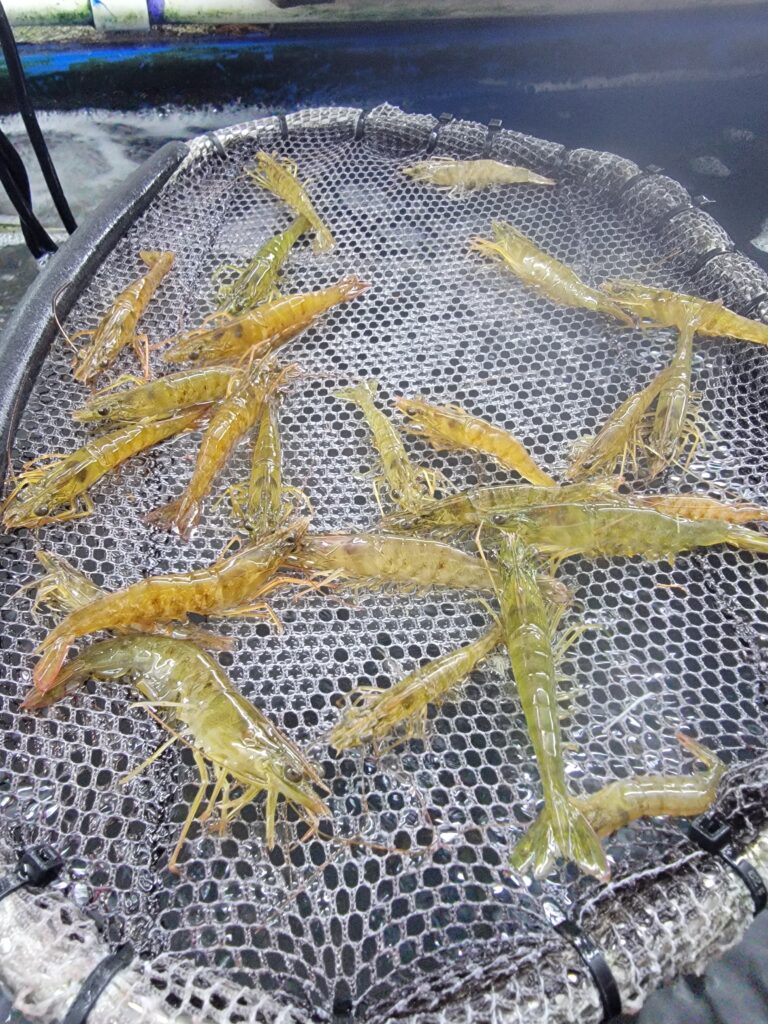
The Palmetto Solution: To defeat this pattern, you must match your terminal selection with mechanical precision. At Skyway Bait and Tackle, we eliminate the guesswork by completely pioneering the pre-sorting of live shrimp into four distinct, calibrated sizes: Small, Medium, Large, and Jumbo. Right now, on the high-clarity grass flats, the tactical play is to deploy pre-sorted Large live shrimp pinned perfectly through the carapace on a super-sharp 1/0 thin-wire circle hook. If you are targeting finicky Spotted Seatrout in the sand potholes near the Green Bridge, drop down to our pre-sorted Medium shrimp on a size 1 light-wire hook. This ensures the bait retains its maximum kick frequency, staying elevated above the grass line and forcing an instinctive reaction strike from surrounding predators.
Way to Lose 2: Miscalculating NOAA Tidal Flow Velocity
The second critical error costing anglers trophy fish is the static misunderstanding of water movement. Most casual boaters look at a standard tide clock, see that the water is high or low, and plan their drifts across Terra Ceia or the perimeter flats of the Tampa Bay shipping channels based purely on depth. This is a severe mathematical mistake. Fish do not eat depth; they eat the kinetic energy of the water pushing forage across structural choke points.
Over the last 6 days, specific atmospheric pressures have accelerated the velocity of the water column, making the transition periods between high and low tide exceptionally violent. When the flow velocity climbs too high, baitfish and shrimp are blown completely off the shallow flats and forced into deep depressions or behind structural breaks. If you are blindly casting into shallow grass during the peak velocity of a spring tide, your bait is sweeping past the fish far too fast for them to expend the energy to pursue it. If you fish the dead low or dead high water mark when flow velocity hits zero, the fish go completely dormant because there is no current to deliver food to their ambush stations.
The Palmetto Solution: You must stop relying on basic high/low tide predictions and integrate our proprietary “What’s the Flow” tide chart into your pre-trip planning. This advanced digital tool pulls live depth data combined with exact real-time flow velocity directly from local NOAA reporting stations.
To “Catch More Fish,” look for the exact windows where the velocity curve is expanding but has not yet peaked—ideally between 0.8 and 1.5 knots of flow. When the “What’s the Flow” chart indicates velocity is hitting its maximum clip, pivot away from the shallow flats and target the hard back-eddies behind Snead Island or the deep scour holes beneath the Green Bridge, where gamefish huddle to escape the brute force of the current while picking off disoriented bait.
Way to Lose 3: The Flash (Visual Detection Failure)
The final and most pervasive line of failure on the flats is a total disregard for underwater optics. The summer sun over Tampa Bay creates an incredibly harsh, high-glare environment. In shallow water ranging from 12 inches to 3 feet, sunlight penetrates completely to the bottom, magnifying every single foreign object in the water column.
Anglers are using standard clear fluorocarbon or clear monofilament leaders, operating under the false impression that “clear” means invisible. It does not. Standard clear lines act exactly like miniature fiber-optic cables; they catch the overhead sunlight and project a distinct, bright glare through the water column. The exact split-second an inshore predator turns to commit to your bait, it catches this bright metallic reflection—known technically as “The Flash.” The fish spooks instantly, aborting the strike and moving off the flat.
The Palmetto Solution: The technical cure for “The Flash” is to completely eliminate clear line glare by transitioning your terminal architecture to TrikFish Camo leader material. TrikFish Camo utilizes a scientifically engineered multi-colored tinting pattern that breaks up the continuous line profile under water.
Instead of reflecting a solid, unbroken beam of sunlight into a Snook’s field of vision, the camo coloration absorbs and scatters light perfectly across the changing backgrounds of green turtle grass, dark brown shoal grass, and white sand potholes. It renders the leader completely unidentifiable to the fish. Spool up a 25-pound test section of TrikFish Camo leader to bridge your braided main line to your hook, giving you a completely covert presentation that allows you to trick the oldest, most pressured fish on the flats.
TECHNICAL Q&A
Why are the Snook snubbing live shrimp today? They are detecting the line profile or the bait is moving unnaturally due to improper hook weighting. On high-visibility flats, switching to a lighter wire hook and utilizing a multi-colored leader like TrikFish Camo will eliminate “The Flash” and restore the natural swimming kinetics of the shrimp, triggering the strike.
What depth are the Redfish holding at during peak heat? Redfish are retreating to the 3-to-5-foot mangrove troughs and deeper shaded cuts around Snead Island. As surface temperatures spike on the shallow flats, they seek out these cooler, oxygen-rich depressions and will only commit to baits presented directly along the bottom structure.
How does flow velocity affect Spotted Seatrout positioning in potholes? When tidal current velocity increases, Spotted Seatrout position themselves strictly on the down-current lip of sand potholes. They utilize the structural drop-off as a physical shield against the heavy water movement while waiting for shrimp and small baitfish to be swept over the edge.
When should I use Jumbo live shrimp versus Medium live shrimp on the flats? Deploy pre-sorted Jumbo live shrimp when targeting trophy Snook in deep, high-flow ambush channels where a massive physical presence is required to get noticed. Transition to pre-sorted Medium live shrimp when stalking finicky Redfish or Trout in ultra-shallow, clear water where a large splash or heavy presentation will immediately spook the school.
Why are fish ignoring my baits during the peak high tide mark? During the absolute peak of the high tide, water movement completely stops, causing the flow velocity to drop to zero. Without current to drift forage, predatory gamefish completely suspend their feeding activity; you must use the “What’s the Flow” chart to target the high-velocity windows flanking the slack tide.
PalmettoBaitShop #SkywayBait #TrikFishCamo #FishingReportPalmetto #LiveBaitNearMe #SkywayPier