Based on the patterns from the last 7 days, the Sunshine Skyway Fishing Piers are tracking an absolute overload of predatory species shifting away from historical spring zones directly into deep concrete fractures. The massive schools of Spanish Mackerel have altered their hunting routes, abandoning the high-profile flats to stack directly against the mid-span fender systems, while legal-sized Mangrove Snapper are aggressively carpet-bombing lines dropped directly inside the piling shadows. If you are wasting time free-lining light lines in open water, you are getting completely bypassed by the real meat of this run.
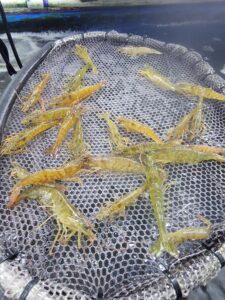
Before you make your way up the concrete incline, you need to pull up to the counter at Skyway Bait in Palmetto. The structural environment right now requires a heavy payload. Our live wells are fully operational and loaded with fresh small, medium, large, and jumbo shrimp. We don’t play around with deceptive names like “selects” or “handpicks”—we are the first shop in the region to mechanically pre-sort our shrimp by size so you get immediate, consistent payloads. Secure our large or jumbo live sizes for the deep bottom bite, and stack your coolers with our fresh frozen threadfin herring to tackle the pelagics.
Verified FWC Regulations
Timestamp of Search: May 31, 2026, 7:12 PM EDT
Data verified directly via official Florida Fish and Wildlife Conservation Commission mandates (myfwc.com) for the Tampa Bay/Manatee County region:
-
Spanish Mackerel: Open year-round. Minimum size limit: 12 inches fork length. Daily bag limit: 15 fish per person.
-
Mangrove (Gray) Snapper: Open year-round. Minimum size limit: 12 inches total length (for state waters/piers). Daily bag limit: 10 fish per person.
-
Gag Grouper: CLOSED SEASON. Recreational harvest in all Gulf state waters is strictly closed until September 1, 2026. CATCH AND RELEASE ONLY. Any Gag Grouper hooked must be safely unhooked and returned immediately to the water unharmed.
-
Common Snook (Tampa Bay Region): CLOSED SEASON. Recreational harvest closed May 1 through August 31. CATCH AND RELEASE ONLY.
The Tactical Audit
Skyway Pier Rebuild & Demolition Update
Let’s get directly into the heavy machinery, concrete, and steel realities that are reshaping the bay right now. Following the extensive structural compromises left behind by Hurricane Milton, the state has fully advanced its multi-million dollar Skyway Fishing Pier Rebuild and Modification project. On the South Pier (Manatee Side), the structural footprint is permanently altered. Engineering crews are finalizing the active permitting phase to begin the physical demolition of the degraded, unused deep-water spans.
Once demolition clears the old footprint, a completely redesigned, modernized pier structure will be built from the ground up directly adjacent to the existing roadbed. Concurrently, on the accessible sections of the North Pier (Pinellas/Hillsborough Side), crews are executing intensive underwater pile jacketing, core drilling, and concrete deck rehabilitation.
Here is the daily tactical advantage that lazy anglers are completely missing: The continuous mechanical vibrations from the heavy hydro-demolition equipment, jackhammers, and pile-driving barges are violently shaking the structural columns. This constant underwater percussion is physically shearing mature barnacle clusters, rock crabs, and macro-crustaceans cleanly off the older pilings.
The state’s active work has inadvertently generated the largest, most consistent 24-hour natural chum line in Tampa Bay history. Hundreds of thousands of baitfish and pinfish are swarming these construction zones to gorge on the falling debris, which has subsequently pulled heavy schools of mature Mangrove Snapper and predatory Gag Grouper directly into the fishable water columns flanking the safety barriers. Do not avoid the construction perimeters—position your presentation exactly down-current of the active work platforms where the sediment plume and sheared forage are drifting.
Real-Time Marine Analytics
To navigate the complex cross-currents running between the old pilings and the new construction barges, you must stop guessing at water velocity. Anglers must check either our Google AI-powered “What’s Bitin” tool or our “What’s the Flow” tide chart before selecting their parking station. The Skyway spans function as a massive hydrodynamic choke point for the entire estuary. Standard tide apps only tell you when the water is high or low; our system extracts real-time vertical depth and horizontal kinetic flow rates directly from active NOAA reporting stations.
When the “What’s the Flow” index indicates a steady current velocity between 1.2 and 1.8 knots, Spanish Mackerel will align themselves with military precision inside the eddy lines on the down-current face of the main channel pylons. If the horizontal flow exceeds 2.2 knots, your line will blow completely out of the strike zone and snag the submerged rock templates unless you significantly upgrade your terminal lead.
The “Ways to Lose” Analysis
1. The Spanish Mackerel “Cut-Off” and Line Flash
Anglers targeting the fast-moving schools of Spanish Mackerel currently slashing the upper column are suffering systemic line failures. Mackerel are visually driven, apex sight-hunters with razor-sharp dental structures. When you deploy standard clear monofilament or expensive fluorocarbon leaders, you are falling into a classic marketing trap. Under the intense glare of the Florida sun, clear lines act like fiber-optic cables, throwing off a bright, artificial reflective glint—”The Flash.” The mackerel mistake this artificial glint for a fleeing glass minnow and strike the line itself, shearing your rig instantly. Furthermore, clear fluorocarbon becomes incredibly brittle under high-impact structural friction, leading to premature knot failures when a fish surges under the rail.
The definitive solution is discarding clear leaders and rigging with TrikFish Camo. This specialized line utilizes a multi-tonal, variegated color scheme that completely absorbs light rays, breaking up the visual silhouette of the line in high-clarity water and eliminating the reflective glint entirely. Tie a 30-pound test camo leader directly to a long-shank size 1/0 hook. The elongated metal shank provides a clean, physical barrier against the mackerel’s teeth, completely removing the need for heavy, visible steel wire that causes pressured fish to shut down.
2. Getting “Rocked” by Submerged Scour Templates
The bottom template surrounding the main channel pilings is currently a high-density zone for heavy, resident predators. Brute Gag Grouper are aggressively holding deep inside the current-carved scour holes at the base of the structure. Anglers are hooking into these fish but are getting broke off within the first two seconds of the fight. If you attempt to fish with a loose drag or standard medium-action rods, the grouper will instantly turn its head into a concrete cavity or a submerged rock template, parting your line on the barnacles instantly.
You must lock your reel’s drag system completely down to its maximum mechanical threshold and deploy a heavy-power, fast-action rod blank. When a heavy grouper strikes, you cannot concede a single inch of line. Position your bait on the down-current side of the square pilings where the water velocity drops. Hold the rod at a strict 45-degree angle away from the concrete. The millisecond the tip loads, execute a continuous, high-velocity vertical reeling sequence to engage the full structural backbone of the blank, dragging the fish’s head five feet up off the bottom template before it can utilize the structure for leverage.
3. Pinfish Saturation and Sub-Sized Bait Crushing
If you are dropping generic, un-sorted “mixed” bait to the bottom right now, you are losing your presentation to schools of juvenile pinfish and modern bait-thieves before it ever reaches the keeper-sized Mangrove Snapper holding tight to the structural cross-beams.
The solution is strict bait size management. At Skyway Bait, we sort our shrimp by exact dimensions: small, medium, large, and jumbo. For the heavy structural bite, you need to deploy our large or jumbo live shrimp exclusively on a short-shank, heavy-wire circle hook. The tougher, larger shell of a jumbo shrimp allows it to withstand the initial pecks of bait-thieves, remaining completely intact until a keeper-sized Mangrove Snapper aggressively inhales the entire presentation.
For the mackerel patrolling the upper half of the column, deploy our fresh frozen threadfin herring—tail-hooked so they hang horizontally and naturally in the tidal current. Note that there is no such thing as “jumbo” frozen threadfins across the industry—they simply come in whatever size they are netting at sea. Our inventory is frozen immediately upon offloading to preserve the silver sheen and flesh density, ensuring the bait stays securely pinned to your rig during high-velocity casts into the current.
Technical Briefing: Q&A
Why are the Mangrove Snapper holding completely inside the piling shadows instead of open water? The current mid-day water clarity around the pier means heightened visibility. The snapper utilize the dense shadows cast by the pier deck and the concrete cross-beams as ambush cover and protection from overhead predators. You must cast your rig parallel to the structure so it drifts directly through the dark water columns.
What is the exact depth the Spanish Mackerel are feeding at along the South Pier? They are currently holding in the upper 6 to 10 feet of the water column, actively driving greenbacks and glass minnows against the incoming tide ripples near the high-span channels.
Can I legally harvest a Gag Grouper from the pier if it clears the old 24-inch rule? Negative. The FWC season for Gag Grouper is completely closed right now and does not open for harvest until September 1, 2026. Any Gag hooked must be unhooked safely with a venting tool or dehooker and released immediately.
Why are the Spanish Mackerel ignoring my silver spoons today? When the glass minnow schools are thick, the mackerel match their vision to that exact tiny profile. A massive, heavy silver spoon looks unnatural. Switch to a free-lined frozen threadfin cut into small, angled plugs that mimic the exact size of the natural forage currently moving through the spans.
What size egg sinker do I need to hold bottom for snapper when the “What’s the Flow” chart reads 1.5 knots? At 1.5 knots of lateral current, a 2-ounce egg sinker pinned above a short camo leader is the exact mechanical weight required to keep your jumbo shrimp locked into the bottom eddy without tumbling into the rock piles.
PalmettoBaitShop #SkywayBait #TrikFishCamo #FishingReportPalmetto #LiveBaitNearMe #SkywayPier